Step 1: Define Your Process Requirements
Before evaluating any filtration product, map out your specific process parameters. Identify the type of liquid or slurry being filtered, its temperature range, viscosity, and the nature of contaminants present. Food and beverage applications vary widely — from clarifying fruit juices to polishing brewing water or removing particles from cooking oils. Knowing your target contaminant size, acceptable flow rate, and required filtration efficiency will narrow your options significantly. Documenting these parameters also helps when consulting with filtration engineers who can match equipment to your exact process conditions.
Step 2: Select the Right Filter Media for Food Contact
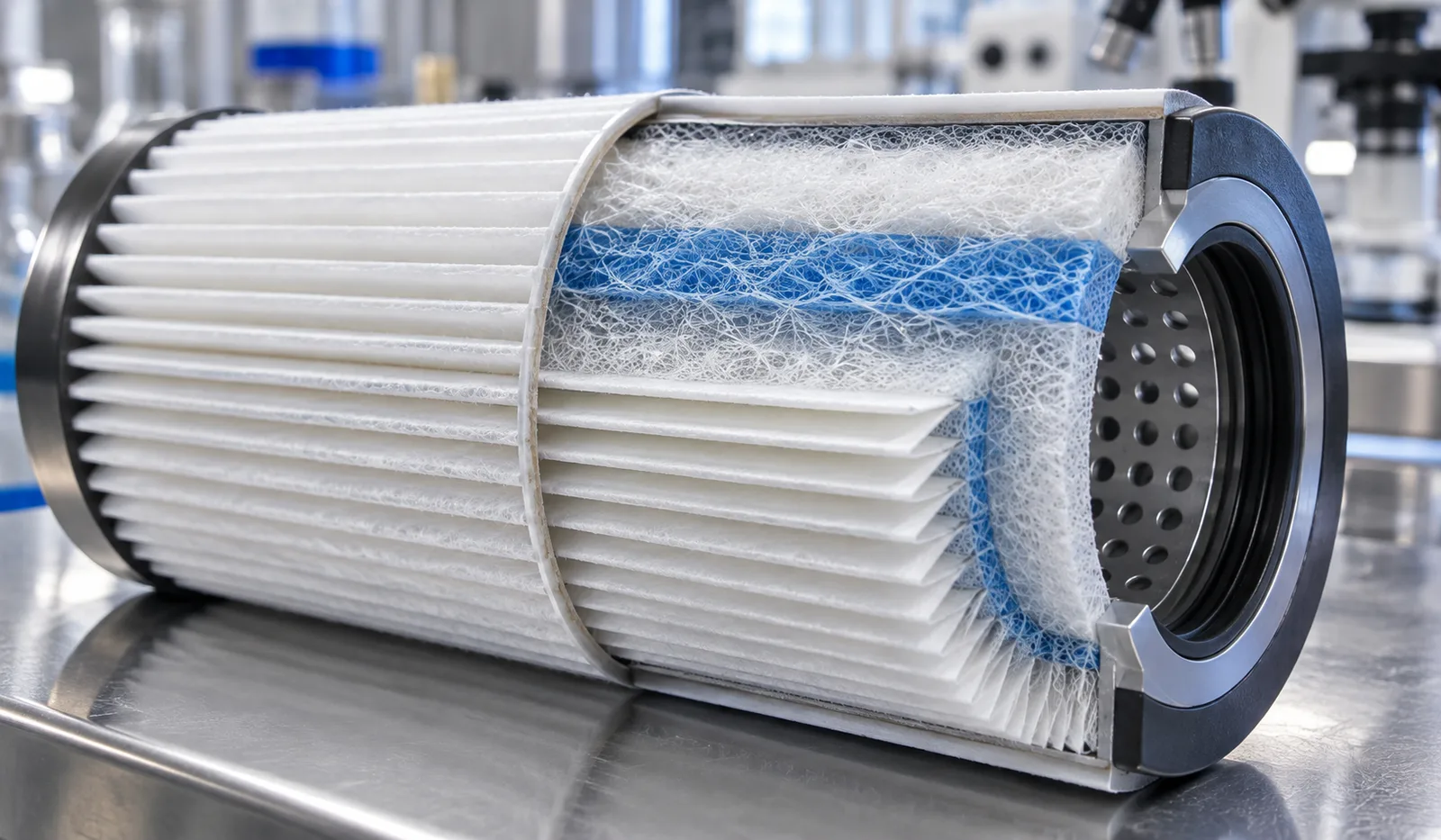
Food grade filtration equipment must use materials that comply with food safety regulations. Common media include polypropylene (PP), polyester (PES), polytetrafluoroethylene (PTFE), nylon, and stainless steel. Each offers different chemical resistance, thermal tolerance, and micron ratings. For edible oils, beverages, and dairy, look for media that is FDA-compliant and meets EU food contact standards. Stainless steel filter cartridges, for example, are reusable, easy to clean in place (CIP), and withstand high temperatures — making them a durable choice for many food processing lines. Pullner Filter offers a range of high-flow cartridges suited to food and beverage applications, with materials validated for direct product contact.
Step 3: Match Filtration Grade to Contaminant Size
Filtration is rated by micron size, typically from coarse (100+ µm) down to sub-micron (0.5 µm and below). For food processing, common grades include:
- 100–200 µm for removing large solids and debris
- 20–50 µm for general sediment removal
- 1–10 µm for fine polishing and clarity
- 0.5–1 µm for microbial reduction and sterile filtration
Selecting the wrong grade leads to either clogged cartridges or insufficient contaminant removal. A multi-stage approach — starting with a coarse pre-filter and finishing with a fine polisher — extends cartridge life and reduces total operating cost. Pullner’s lab testing capabilities, including PMI and SEM pore analysis from 3 nm to 150 µm, help verify that the selected media matches your required removal efficiency.
Step 4: Verify Certifications and Compliance
Food safety regulations require that any equipment contacting food products meets specific standards. Look for filtration systems certified under NSF/ANSI Standard 61 or NSF/ANSI Standard 42 for drinking water, and 3-A Sanitary Standards for dairy and liquid food processing. The FDA's food contact substance notification program provides guidance on acceptable materials. Additionally, ISO 9001 certification indicates that the manufacturer follows documented quality management practices. Pullner operates an ISO 9001 quality system with 100% factory testing and batch-level traceability, providing documented assurance for regulated food environments.
Step 5: Evaluate Housing Design and Cleanability
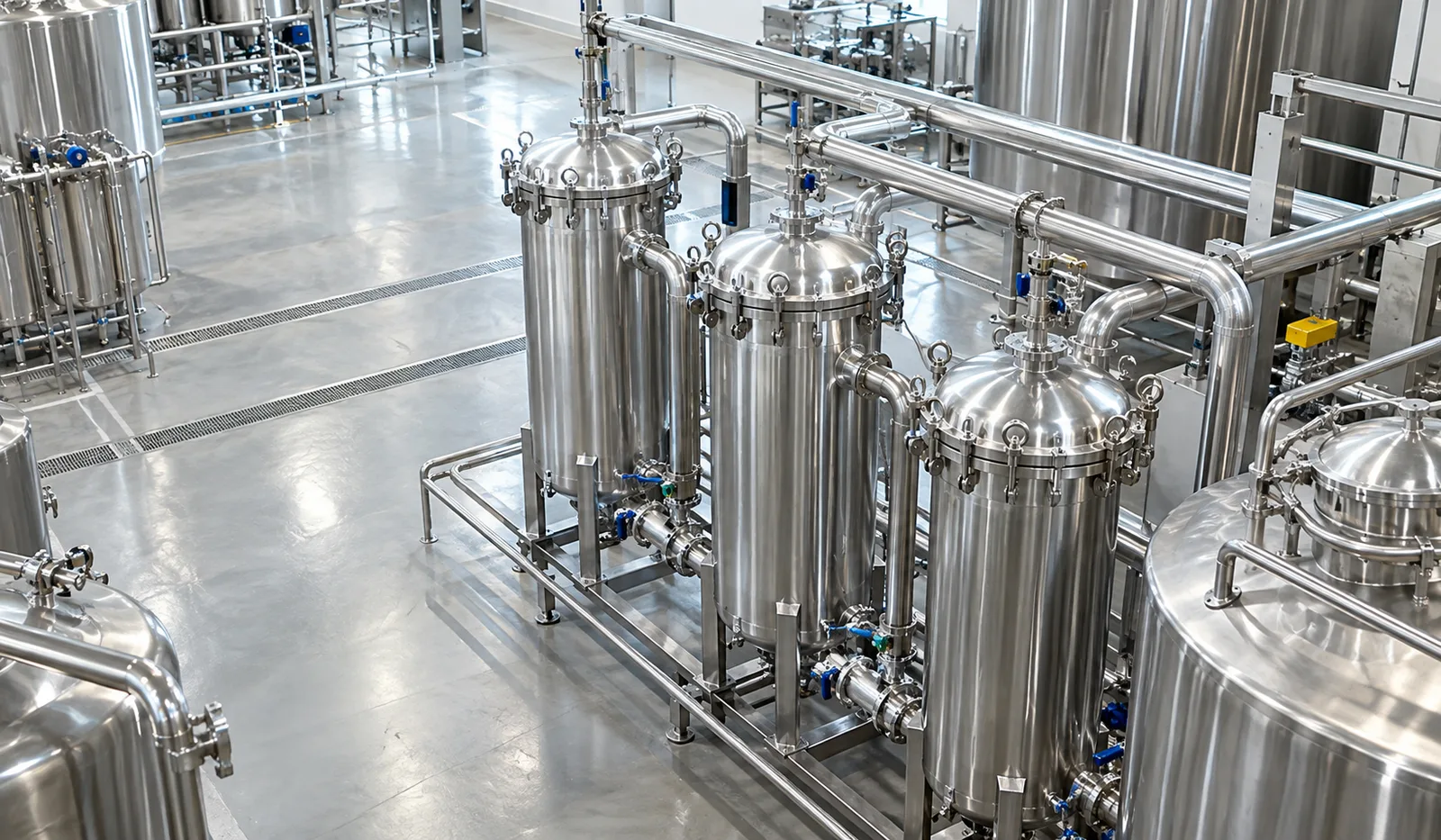
The filter housing — the vessel that holds the cartridge — is as important as the media itself. For food grade applications, housings should be constructed from 304 or 316L stainless steel with sanitary tri-clamp connections or flanged fittings that allow easy disassembly. Smooth internal surfaces and the ability to perform clean-in-place (CIP) cycles prevent bacterial growth and cross-contamination. The NSF International guidelines for food equipment emphasize designs that are accessible for inspection and cleaning. Pullner’s stainless steel filter housings are engineered with maintenance-friendly features and are available in configurations that integrate directly into food processing skids.
Step 6: Plan for Scalability and Ongoing Support
Choose a filtration partner that can supply consistent quality at the volumes your process requires. A single production line may need dozens of cartridge changes per year; a large facility may need thousands. Confirm that the manufacturer can deliver repeatable performance batch after batch. Pullner’s 30+ production lines produce over 4,000 filter elements per day, with standard lead times that support both scheduled maintenance and urgent replacements. Global technical support teams in four regions and free sample programs reduce the risk of trial-and-error selection. For more on the advantages of stainless steel media in food processing, read about stainless steel filter cartridge benefits and selection tips.
Step 7: Test Before You Commit
Before purchasing full-scale equipment, request samples and conduct on-site trials. Many reputable manufacturers offer free sample cartridges and testing services. Pullner provides free samples shipped worldwide, along with complete experimental reports covering flow rate, resistance, efficiency, and dirt-holding capacity. Testing your actual process fluid under real conditions removes guesswork and ensures the selected food grade filtration equipment will perform as expected before you invest in volume quantities. A thorough validation step saves money, reduces downtime, and protects product quality from day one.