Understanding the Variables in Precision CNC Machining Pricing
Getting a clear picture of Precision CNC Machining cost is essential for any product development or production budget. Unlike standard machining, precision work demands tighter tolerances, more rigorous inspection, and often more advanced equipment. The price you pay for a machined part is not arbitrary; it reflects a combination of material choices, design complexity, production volume, and finishing requirements. By understanding these variables, you can make informed decisions that balance quality with cost.
For companies sourcing from a Precision CNC Machining partner with ISO 9001 and IATF 16949 certifications, the cost structure also includes investments in quality management systems, traceability, and skilled labor. These factors contribute to consistent, repeatable results that meet demanding specifications across industries such as automotive, energy, and marine.
Material Selection and Its Effect on Cost
The raw material you choose is one of the largest single cost drivers in any CNC project. Different metals and plastics vary widely in price per kilogram, but the material cost also includes machinability — how easily and quickly a material can be cut, drilled, and finished.
- Aluminum is cost-effective and machines quickly, making it a popular choice for prototypes and production runs alike.
- Steel and stainless steel are harder, require slower cutting speeds and more robust tooling, which increases both cycle time and tool wear.
- Titanium offers exceptional strength-to-weight ratio but is difficult to machine, demanding specialized tooling and coolant strategies that raise per-part cost.
- Brass and copper machine well but can cause tool sticking; their material cost is moderate to high.
- Engineering plastics such as acetal, nylon, and acrylic are generally less expensive than metals and cut quickly, though some require careful chip management.
When requesting a quote, specifying the exact alloy or grade matters. For example, 6061 aluminum costs less than 7075, and the difference affects both material price and machining parameters. A reputable shop will provide a detailed DFM (Design for Manufacturability) analysis that highlights material-driven cost implications.
Design Complexity, Tolerances, and Setup Time
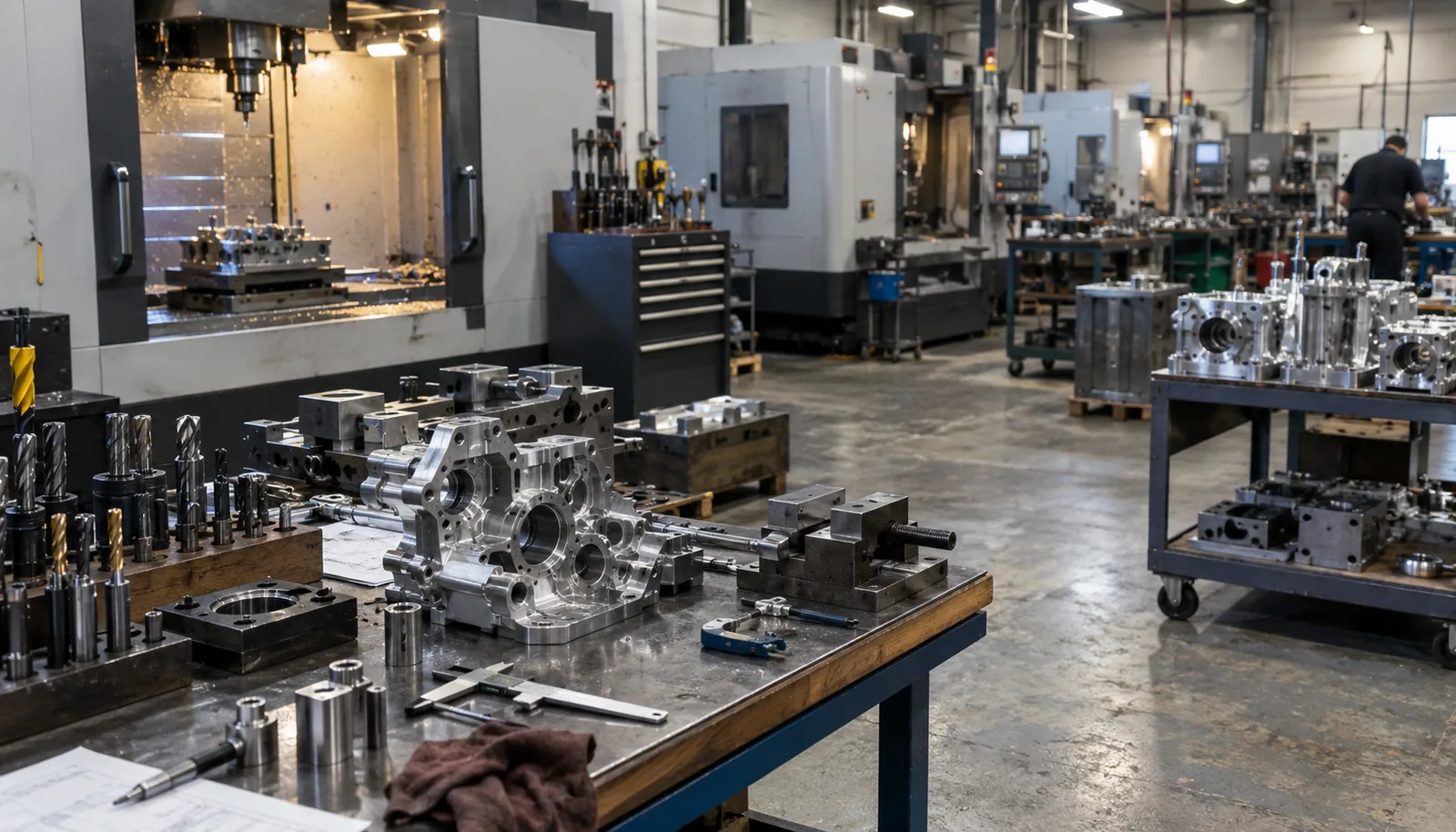
Part geometry directly influences machining cost. Simple 2.5-axis parts with flat surfaces and standard hole patterns can be programmed and cut rapidly. Complex 3D contours, undercuts, thin walls, and tight internal radii require multi-axis machining, longer cycle times, and more sophisticated CAM programming.
Tolerance requirements are another major factor. Standard machining tolerances of ±0.1 mm are relatively inexpensive to hold. As tolerances tighten to ±0.025 mm or ±0.003 mm — the level XTJ CNC achieves with its 120+ advanced machines — the cost increases due to slower feed rates, more frequent tool changes, and additional in-process inspection using CMM (coordinate measuring machine) equipment. Every extra decimal place of precision adds measurable time and quality-assurance overhead.
Setup and programming are fixed costs that get spread across the run quantity. For a single prototype, the setup cost dominates. For a production run of hundreds or thousands of parts, the per-piece contribution of setup becomes negligible. This is why many precision machining providers, including XTJ CNC, offer no minimum order quantity (MOQ) for prototypes while recommending larger quantities for economical production.
"The most expensive part is often the first one — after setup, each additional piece costs significantly less."
Production Volume and Lead Time
Volume pricing in CNC machining follows a classic curve. Small batches (1–50 pieces) carry high per-unit costs because setup, programming, and inspection are amortized over few parts. As volume increases into the hundreds or thousands, per-unit price drops substantially. Shops with large machine parks, such as XTJ CNC's fleet of 120+ machines, can run multiple jobs simultaneously, reducing overall lead time and enabling competitive pricing across volume tiers.
Lead time also interacts with cost. Standard lead times of 3–4 weeks allow a shop to optimize machine scheduling and combine runs efficiently. Expedited delivery — for example, prototypes in five days — consumes priority capacity and may incur a premium. When planning a project, balancing desired delivery speed against cost is a key strategic decision.
For businesses that maintain regular production schedules, establishing a blanket order or ongoing supply agreement can lock in favorable rates and guaranteed machine time. Many precision machining partners offer volume-based pricing tiers that reward consistent, predictable demand.
Secondary Operations and Finishing
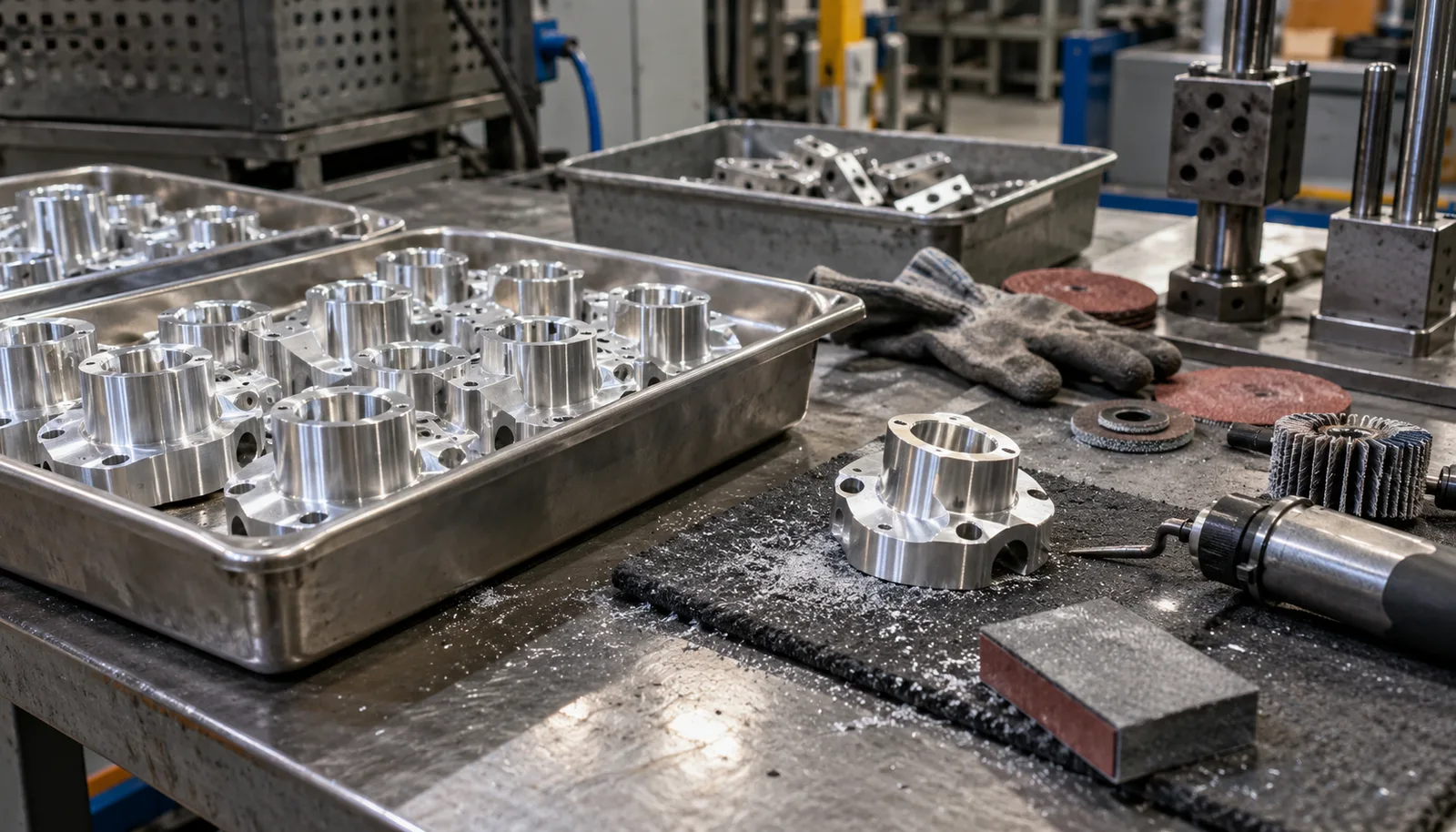
The cost of a machined part does not end when it comes off the spindle. Secondary operations add significant value — and cost. Common post-machining processes include:
- Deburring and edge finishing – manual or automated removal of sharp edges
- Surface finishing – bead blasting, anodizing, plating, powder coating, or passivation
- Heat treatment – stress relieving or hardening for steel and titanium parts
- Assembly and kitting – inserting heli-coils, pressing bearings, or packaging sets
- Inspection and certification – CMM reports, material certifications, or first-article inspection (FAI)
Each secondary step requires labor, equipment, and often additional quality checks. When comparing quotes, ask for an itemized breakdown that separates machining cost from finishing and inspection. This transparency helps you identify where cost can be reduced by eliminating unnecessary operations.
For example, a part that will be anodized may not require the same surface finish straight off the machine, because the anodizing process itself creates a uniform appearance. Similarly, internal passages that are not functional may not need deburring to the same standard as sealing surfaces.
How to Get an Accurate Quote for Your Project
The most effective way to control Precision CNC Machining cost is to provide complete, clear design data from the start. Uploading a 3D CAD file in STEP or IGES format, along with a detailed print noting critical dimensions, tolerances, and surface finish requirements, allows a machining partner to produce an accurate quote on the first pass.
A good DFM review will flag features that drive unnecessary cost — such as ultra-tight tolerances on non-critical surfaces, deep cavities that require special tooling, or wall thicknesses that risk vibration during cutting. Accepting engineering feedback early can reduce your per-part cost by 15–30 percent without compromising function.
Finally, consider the total cost of ownership rather than just the unit price. A slightly more expensive part that arrives on time, within spec, and with full traceability may be far cheaper than a low-cost alternative that causes assembly delays or field failures. For critical applications in automotive, energy, or marine environments, the reliability of a certified precision machining partner is a cost factor in itself.