Understanding the South African Construction Landscape
South Africa’s construction sector continues to grow, driven by infrastructure development, housing projects, and commercial building. For businesses involved in concrete product manufacturing, selecting the right equipment is a decision that affects production capacity, product quality, and long-term profitability. A brick making machine is a capital investment that must align with local market demands, raw material availability, and operational goals.
The South African market requires machines that can handle a variety of raw materials, including concrete, cement, sand, and stone dust. Machines must also be robust enough to operate in diverse climatic conditions and be supported by reliable after-sales service. Understanding these local factors is the first step toward making an informed purchase.
Key Factors to Evaluate Before Buying
Choosing the right brick making machine starts with a clear assessment of your production needs. Consider the following factors:
- Production capacity: Estimate the number of blocks or bricks you need per shift. Machines range from small manual units producing a few hundred blocks per day to fully automatic systems capable of thousands per hour.
- Raw material compatibility: Ensure the machine can work with the materials available in your region, such as concrete, clay, or compressed earth.
- Mould flexibility: Interchangeable moulds allow one machine to produce different block sizes and shapes, giving you the ability to adapt to changing customer orders.
- Power and maintenance requirements: Check voltage, fuel type, and the availability of spare parts locally. Machines with simple hydraulic or mechanical systems are often easier to maintain in remote areas.
- After-sales support: Reliable technical support and training can make the difference between a machine that runs smoothly and one that causes costly downtime.
When researching suppliers, it is wise to look beyond the initial purchase price. The total cost of ownership includes shipping, customs clearance, installation, and ongoing maintenance. A slightly higher upfront investment in a well-built machine often pays off through fewer breakdowns and longer service life.
Matching Machine Type to Business Scale
South African businesses range from small start-ups to large-scale commercial operations. The type of machine you choose should match your business stage and growth plans.
For entrepreneurs and small companies, semi-automatic or manual machines offer a lower entry point. These models are simpler to operate, require less capital, and can still produce good-quality blocks for local housing projects. As demand grows, you can add more units or upgrade to a fully automatic system.
Medium to large operations benefit from fully automatic block machines that deliver high output with consistent quality. These machines use hydraulic systems and programmable controls to maintain precise pressure and vibration, resulting in uniform blocks that meet construction standards. Many of these systems also integrate with concrete batching plants for a streamlined production line.
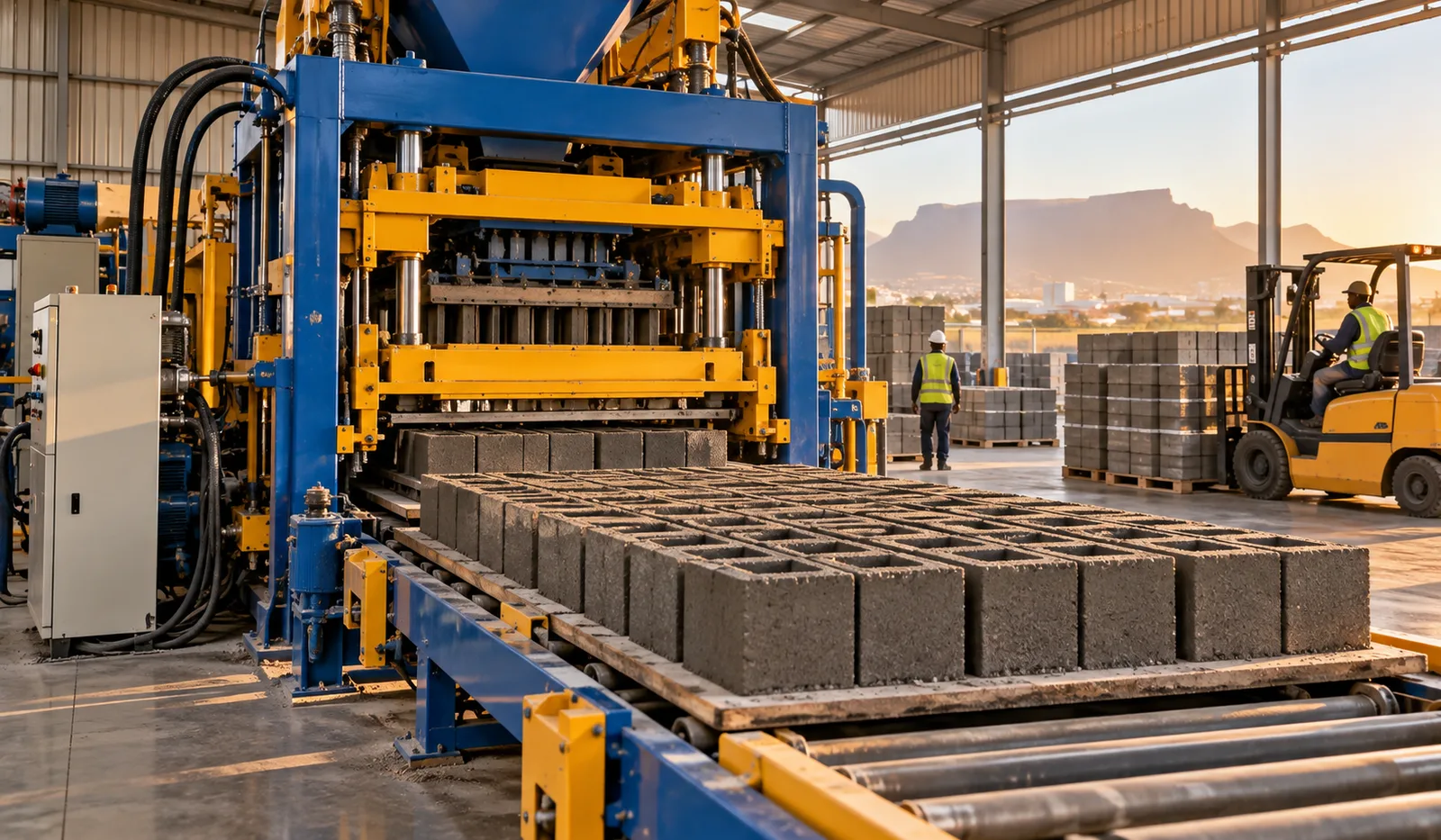
When evaluating any supplier, it is critical to understand how they handle logistics and quality consistency. A practical resource on this topic is the guide on dealing with supplier-side delays and quality variations, which you can read at brick making machine South Africa. This article provides useful insight into managing the procurement process and avoiding common pitfalls.
Quality, Standards, and Certification
Construction materials in South Africa are subject to standards set by the South African Bureau of Standards (SABS) and the National Regulator for Compulsory Specifications (NRCS). Blocks and bricks used in structural work must meet compressive strength and dimensional tolerances. A reliable brick making machine should be capable of producing blocks that consistently meet these requirements.
When selecting a machine, ask the manufacturer about the quality control measures built into the equipment. Features such as controlled vibration frequency, consistent hydraulic pressure, and automatic mould filling all contribute to uniform product quality. Machines that offer these features reduce waste and rework, saving money over time.
It is also worth verifying that the manufacturer has experience exporting to Africa and understands the logistical and regulatory environment. Established manufacturers often provide installation and training services to ensure your team can operate the machine effectively from day one.
For further reading on construction quality standards, refer to the South African Bureau of Standards for official specifications. The Construction Industry Development Board also offers guidance on best practices for construction materials and procurement.
Making the Final Decision
Purchasing a brick making machine is a strategic investment for any South African construction or building materials business. By taking the time to evaluate your production needs, research available machine types, and verify supplier credentials, you can select equipment that will support your business for years to come.
Start by requesting detailed quotations from several suppliers. Compare not only the machine price but also shipping costs, delivery timelines, warranty terms, and the scope of after-sales support. Ask for references from other customers in Africa and, if possible, visit a working installation to see the machine in operation.
A well-chosen brick making machine becomes the backbone of a profitable block production business. With the right equipment, you can supply the growing South African market with high-quality blocks and bricks, build a strong reputation, and scale your operations as opportunities arise.