Why Stainless Steel Benches Are Essential in a Commercial Kitchen
A commercial kitchen runs on efficiency, hygiene and durability. Every surface you work on must withstand constant use, high temperatures, frequent cleaning and the occasional heavy impact. That is why professional chefs and kitchen managers across Australia choose stainless steel as their primary work surface material. A well‑selected stainless steel bench does more than provide a place to chop and plate – it becomes the backbone of your food‑preparation workflow.
Stainless steel resists corrosion, does not harbour bacteria when properly cleaned, and can handle the rigours of a busy service. Unlike other materials, it will not chip, crack or absorb moisture. For any café, restaurant or food‑service business, investing in the right bench means fewer replacements, easier compliance with food‑safety standards and a cleaner, more organised workspace.
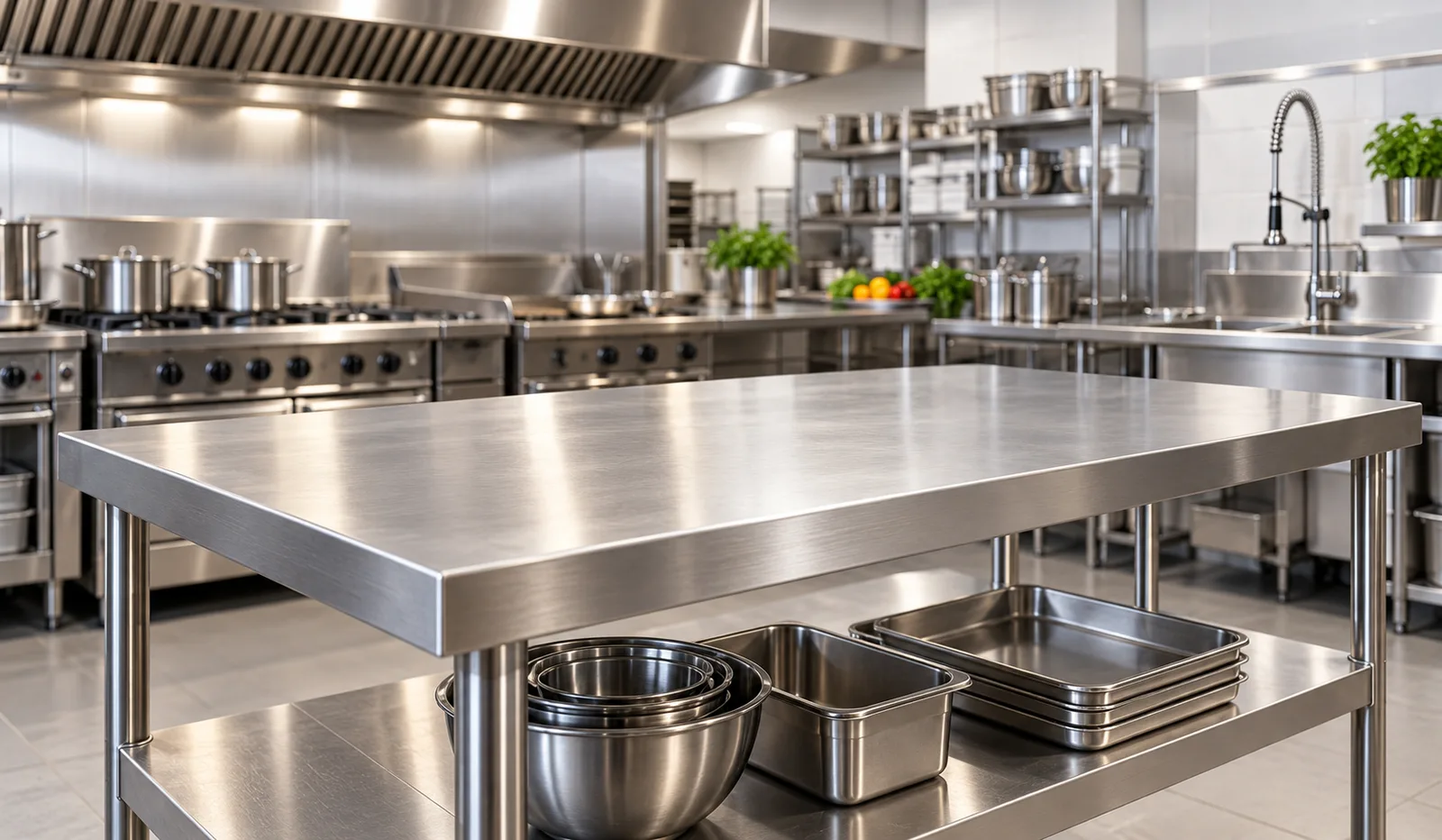
Understanding Stainless Steel Grades and Gauge
Not all stainless steel is created equal. The two most common grades used in commercial kitchen benches are 304 and 316 stainless steel. Grade 304 (often called 18/8) is the standard choice for most indoor kitchens because it offers excellent resistance to rust and staining. Grade 316 contains molybdenum and provides extra protection against chlorides and acidic foods, making it the better option for kitchens near coastal environments or where high‑salt ingredients are handled regularly.
The gauge (thickness) of the steel directly affects the bench’s strength and longevity. A lower gauge number means thicker metal. For a heavy‑duty commercial bench, look for 14‑gauge (approximately 2.0 mm) or 16‑gauge (approximately 1.6 mm) tops. Thinner gauges may save money upfront but can dent, warp or sag under the weight of equipment and repetitive chopping. Always check the manufacturer’s specifications – a reputable supplier will clearly state both the grade and the gauge of their benches.
Bench Size, Configuration and Workflow
Before you purchase, measure your available floor space carefully and think about how your team moves through the kitchen. A bench that is too large will crowd the aisle; one that is too small will bottleneck your prep work.
Consider these practical factors when choosing dimensions and configuration:
- Length and depth – Standard depths range from 600 mm to 900 mm. Deeper benches suit baking and pastry work, while shallower ones work well for plating and pass‑through areas.
- Height – Most commercial benches are 900 mm high, but adjustable legs (usually with plastic or stainless steel feet) let you fine‑tune the height to suit your staff and equipment.
- Undershelving – A lower shelf provides valuable storage for pans, containers and small appliances, keeping the main surface clear.
- Backsplash – A raised backsplash (often 150 mm or 300 mm) protects the wall behind the bench and stops spills from running down the back.
If your kitchen layout is unusual, many suppliers offer custom‑built benches. A tailored fit can dramatically improve your workflow and maximise every centimetre of space.
Hygiene, Cleaning and Compliance
Food‑safety authorities in Australia require that all food‑contact surfaces be smooth, non‑absorbent and easily cleanable. Stainless steel meets these requirements naturally, but the construction details matter.
Seams and joints should be fully welded and ground smooth. Avoid benches that rely on exposed screws or bolts on the work surface – these create crevices where bacteria can hide. A rolled‑edge or turned‑down front lip prevents liquids from dripping onto your legs and floor, and it also adds rigidity to the bench top.
For daily cleaning, stainless steel is straightforward. A wipe with warm soapy water followed by a rinse is usually sufficient. Avoid abrasive pads that can scratch the surface; scratches create tiny grooves that are harder to sanitise. Many commercial kitchens also use a food‑grade stainless steel cleaner or sanitiser as part of their HACCP plan.
Budget, Supplier and Long‑Term Value
A commercial stainless bench is an investment. While it is tempting to choose the cheapest option, a low‑cost bench often uses thinner steel, lower‑grade material and inferior welding. Over a few years of daily use, the savings quickly disappear when the top begins to warp or the legs rust at the welds.
When evaluating suppliers, look for Australian‑based companies that understand local food‑safety regulations and offer clear warranties. Visiting a showroom – such as the Café Solutions showroom in Brendale, Brisbane – allows you to see the bench in person, test the build quality and discuss your specific needs with experienced staff. Because Café Solutions supplies kitchens all around Australia, they can arrange delivery whether you are in the Brisbane area or anywhere else in the country.
A well‑chosen stainless steel bench will serve your kitchen reliably for many years. By focusing on grade, gauge, configuration and cleanability, you can make a confident choice that supports your team, satisfies compliance requirements and stands up to the demands of your busiest service.